Wabi-Sabi: The Beauty of Imperfection in Architecture and Fashion
September 14, 2026 · TWINZ STUDIO
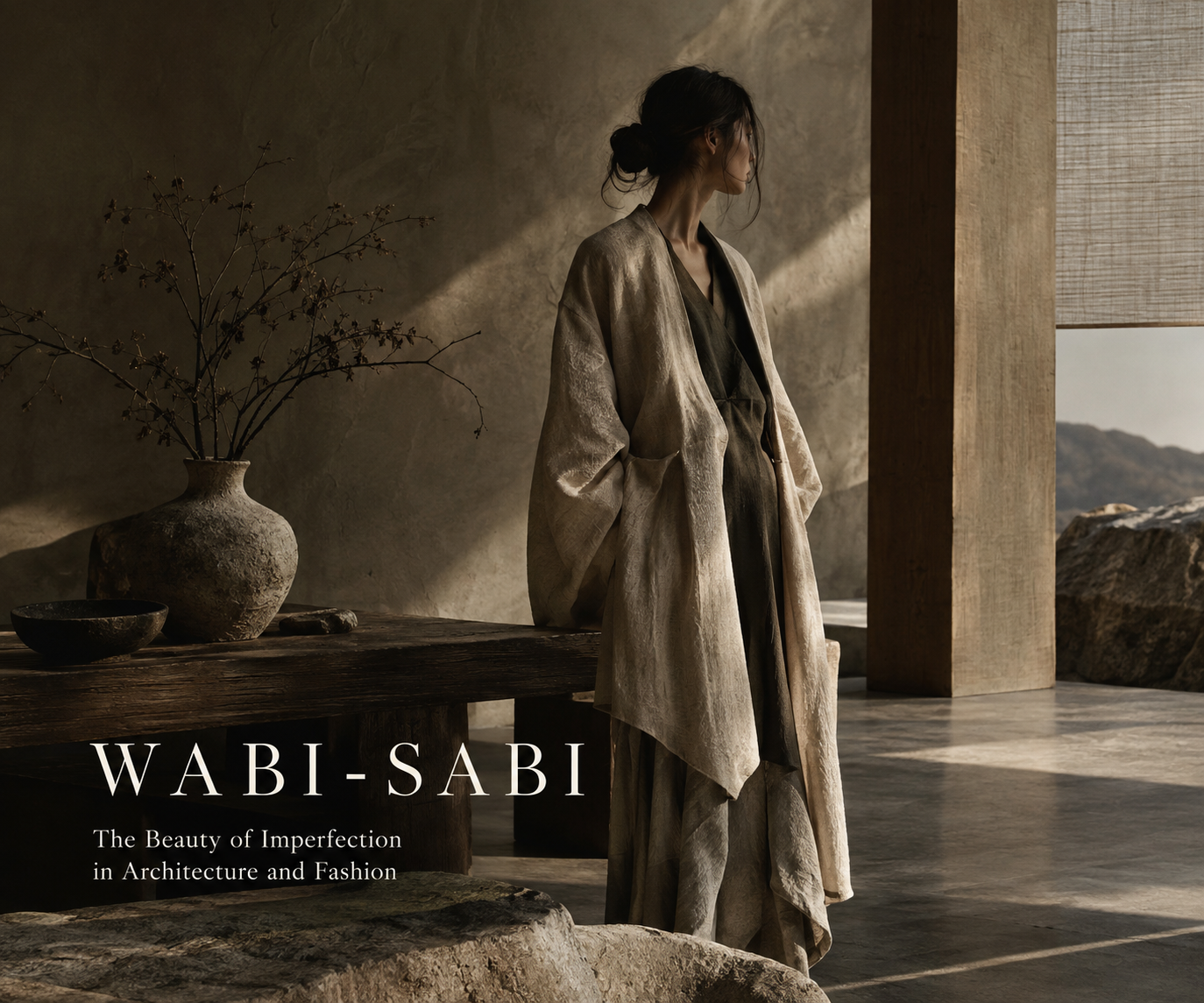
Wabi-sabi is more than an aesthetic of imperfection. It is a way of seeing beauty through transience, simplicity, materiality, and the traces of time. From quiet architectural spaces to raw textiles and imperfect silhouettes, its principles offer a different way of thinking about design.
There is a particular kind of beauty that does not ask to be perfect.
It can be found in the uneven surface of handmade ceramics, the grain of aged wood, a weathered stone, a faded textile, or a garment whose construction quietly reveals the hand that made it.
In a culture increasingly surrounded by polished images, flawless surfaces, and carefully controlled digital environments, these traces of imperfection can feel unexpectedly powerful.
This is where wabi-sabi enters the conversation.
Often associated with Japanese aesthetics, wabi-sabi is a way of seeing that finds beauty in impermanence, simplicity, incompleteness, and the natural marks left by time.
It is not simply a visual style.
It is a different way of understanding objects, spaces, materials, and the process of making itself.
For designers, this perspective can open an entirely different creative territory—one where irregularity can become intentional, restraint can become expressive, and age can become part of an object's identity.
These ideas are particularly interesting when viewed through architecture and fashion.
What Is Wabi-Sabi?
Wabi-sabi is often simplified into the idea of finding beauty in imperfection, but the concept is more nuanced than that.
Its meaning has developed over centuries within Japanese culture and aesthetics, and it is closely connected to ideas of impermanence, simplicity, humility, incompleteness, and the natural passage of time.
The word "wabi" became associated with a sense of simplicity, quietness, and an appreciation for a life removed from excess. "Sabi" came to express the beauty associated with age, wear, patina, and the passage of time.
Together, the ideas suggest a way of looking at the world in which things do not need to remain new, symmetrical, flawless, or permanent in order to possess beauty.
A handmade object can be valuable precisely because no two pieces are identical.
A material can become more beautiful as it ages.
A quiet space can feel more powerful because it does not overwhelm the senses.
A garment can become expressive through the texture of its fabric, the irregularity of its construction, or the evidence of the hand behind it.
Wabi-sabi therefore shifts attention away from perfection and toward presence.
Wabi-sabi does not ask design to be imperfect. It asks us to notice the beauty that perfection can make us overlook.
Wabi-Sabi in Architecture
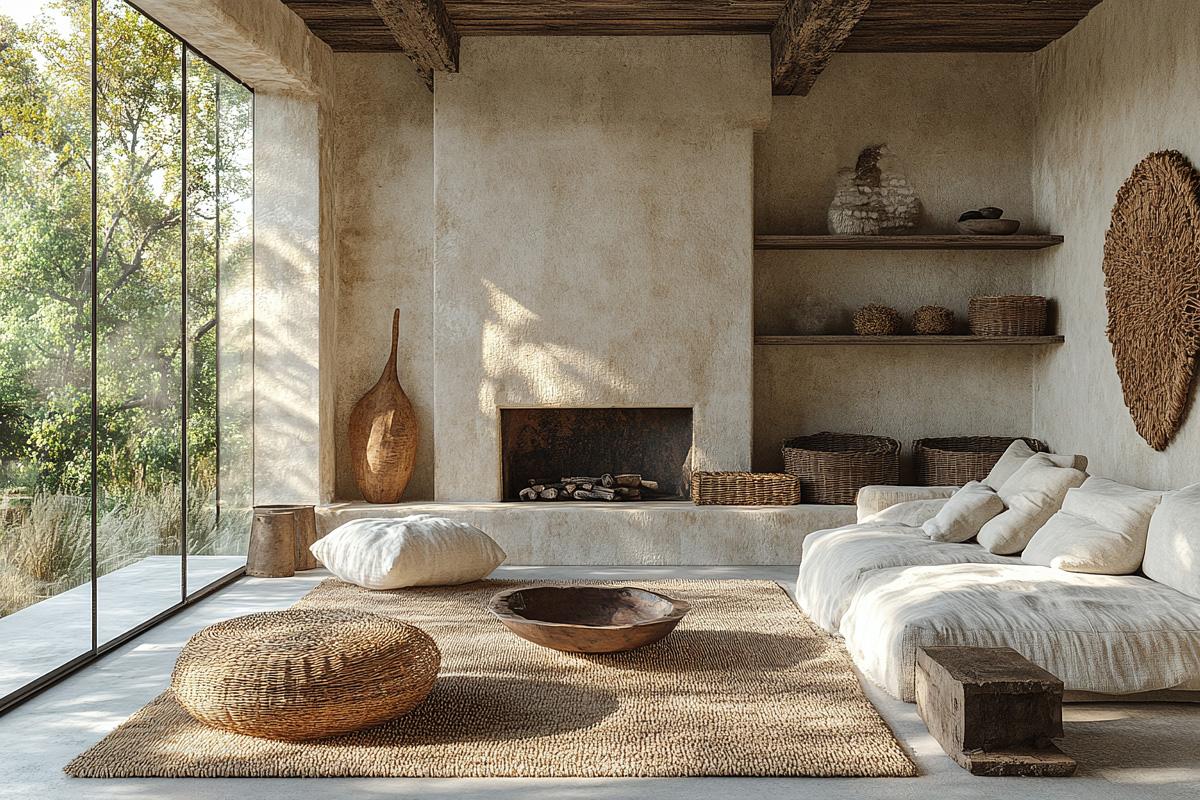
Architecture is one of the clearest places to observe the principles associated with wabi-sabi.
Rather than treating a building as a perfectly controlled object, a wabi-sabi approach can allow architecture to acknowledge material, light, weather, age, and human presence.
Natural materials become important because they change over time.
Wood darkens.
Stone develops texture.
Metal oxidizes.
Plaster reveals subtle variations.
These changes are not necessarily treated as defects. They can become part of the architectural character.
Wabi-sabi architecture often favors restraint over excess. Space is allowed to breathe. Materials are given room to communicate their own qualities. Light becomes a design element rather than simply a method of illumination.
The result is often an environment that feels quiet rather than spectacular.
Instead of demanding attention, the architecture creates conditions in which attention can slow down.
Materiality: When Materials Speak for Themselves
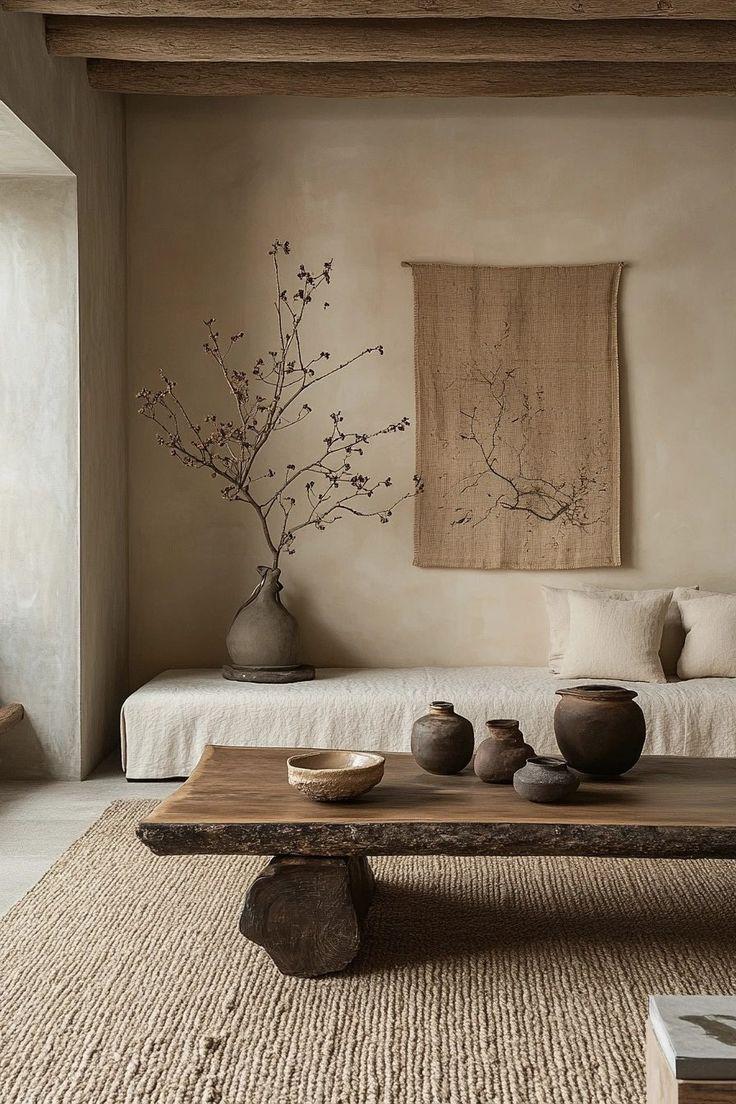
One of the strongest connections between wabi-sabi and design is materiality.
In contemporary design, materials are often selected for consistency. Surfaces are polished, colors are controlled, and variations are minimized.
A wabi-sabi perspective can move in another direction.
Instead of hiding the natural character of a material, it allows that character to become part of the design.
The roughness of linen.
The irregular weave of handmade fabric.
The grain of wood.
The pores of stone.
The subtle variation of natural dye.
The uneven edge of a handmade ceramic piece.
These qualities create visual and tactile information.
They remind us that the object is made from something real.
For designers, this creates an important distinction between decoration and material expression.
A surface does not need to imitate imperfection.
It can simply be allowed to reveal what it already is.
Wabi-Sabi in Fashion Design
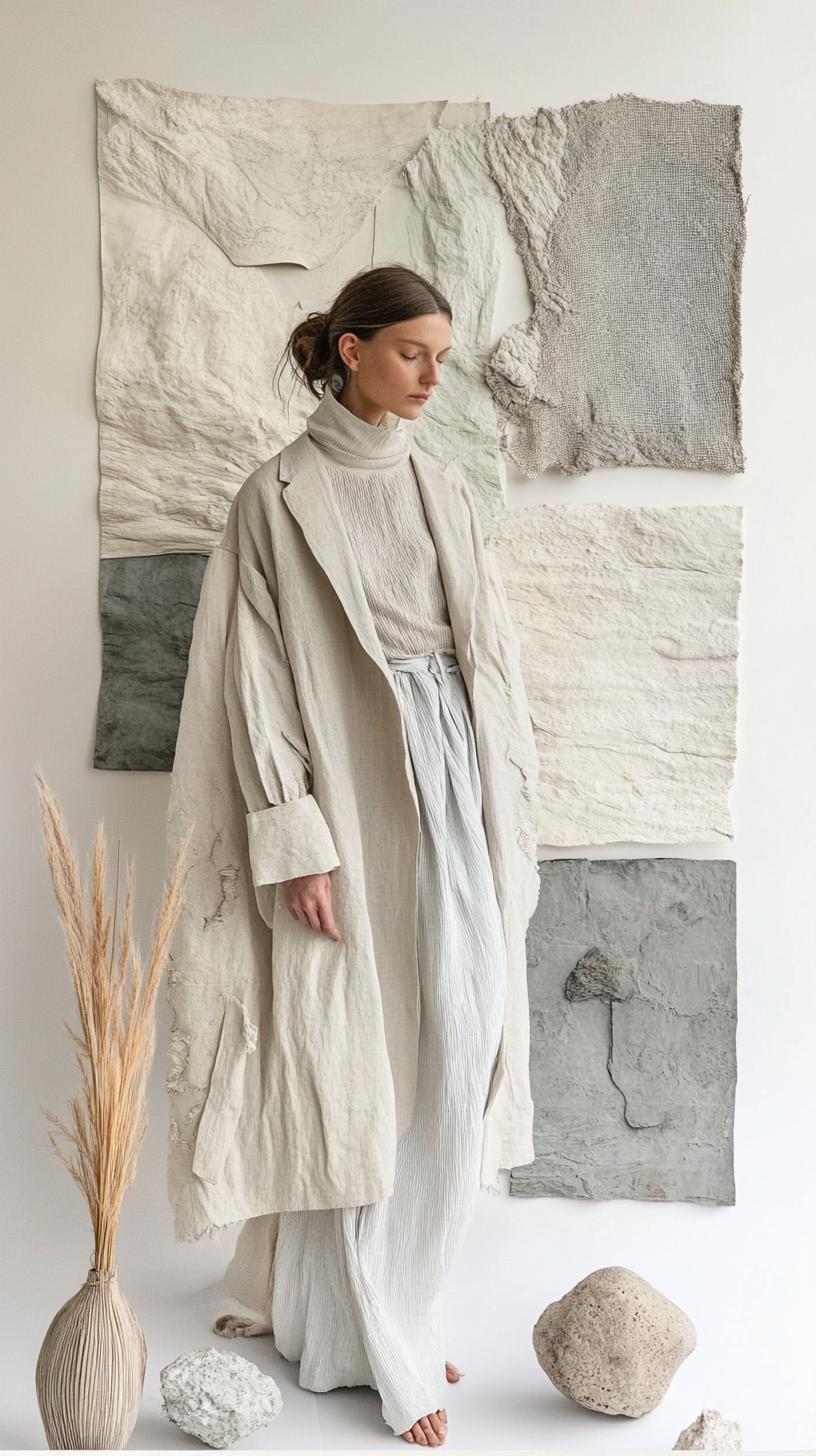
When translated into fashion, wabi-sabi becomes less about creating garments that look "imperfect" and more about reconsidering what makes a garment beautiful.
A wabi-sabi approach can appear through fabric, silhouette, construction, color, finishing, and the relationship between the garment and the body.
Natural textiles are an obvious starting point.
Linen, raw cotton, wool, silk, and other materials with visible texture can communicate a sense of tactility and authenticity.
But the idea can go further.
A silhouette does not always need to be perfectly symmetrical.
A seam can become part of the visual language.
A raw edge can remain visible.
A garment can reveal its construction instead of hiding it.
Pleats can shift rather than repeat with absolute mathematical precision.
Volume can feel relaxed rather than engineered.
The intention is not to make a garment look unfinished.
The intention is to allow the process, material, and character of the garment to remain visible.

Imperfection Is Not the Same as Poor Design
This distinction is essential.
Wabi-sabi should not be confused with careless design, poor craftsmanship, or unfinished work.
A garment with an intentionally raw edge is different from a garment whose edge was simply left unfinished because the designer did not complete it.
An irregular architectural surface can be intentional.
A badly executed surface is simply badly executed.
The difference lies in intention.
Wabi-sabi does not remove discipline from design. In many cases, it requires even greater awareness.
The designer must understand what to leave visible, what to refine, what to simplify, and where imperfection contributes meaning rather than noise.
This is why wabi-sabi can coexist with sophisticated craftsmanship.
The work can be highly considered while still allowing space for irregularity and change.
The beauty is not in making something imperfect. It is in understanding when perfection is unnecessary.
Silhouette, Asymmetry, and the Human Body
In fashion, symmetry often communicates control.
Wabi-sabi can create space for something quieter.
An asymmetrical hem.
An uneven drape.
A sleeve with a different relationship to the body.
A layered silhouette that appears to shift as the wearer moves.
These choices can create garments that feel less rigid and more connected to movement.
The body is not perfectly symmetrical, and neither is movement.
Designing around this reality can create a different kind of elegance—one that feels less manufactured and more alive.
This does not mean abandoning proportion.
Rather, it means understanding proportion well enough to know when balance can exist without perfect symmetry.
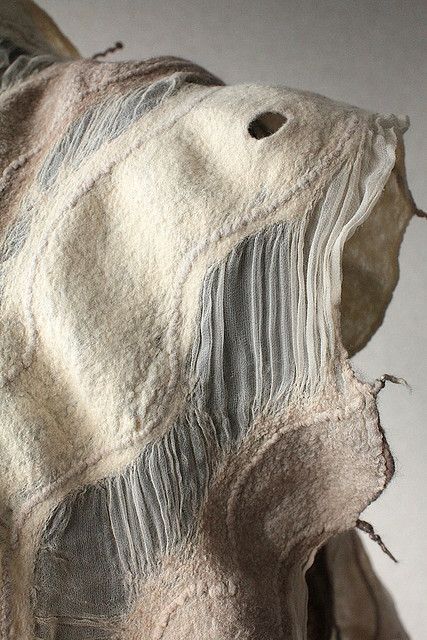
Color and the Quiet Palette
Wabi-sabi is often associated with restrained color palettes.
Earth tones, muted neutrals, off-whites, charcoal, warm grey, faded browns, dusty greens, and naturally occurring variations can create a sense of quietness.
But the principle is not simply "use beige."
A wabi-sabi palette is connected to material and atmosphere.
The grey of stone is different from the grey of synthetic paint.
The warmth of aged wood is different from a perfectly matched brown surface.
The softness of undyed linen is different from a digitally generated imitation of linen.
Color becomes more meaningful when it is connected to the material carrying it.
This is where restraint becomes important.
Rather than using color to demand attention, the palette can allow texture, form, light, and shadow to become part of the visual experience.
The Beauty of Time
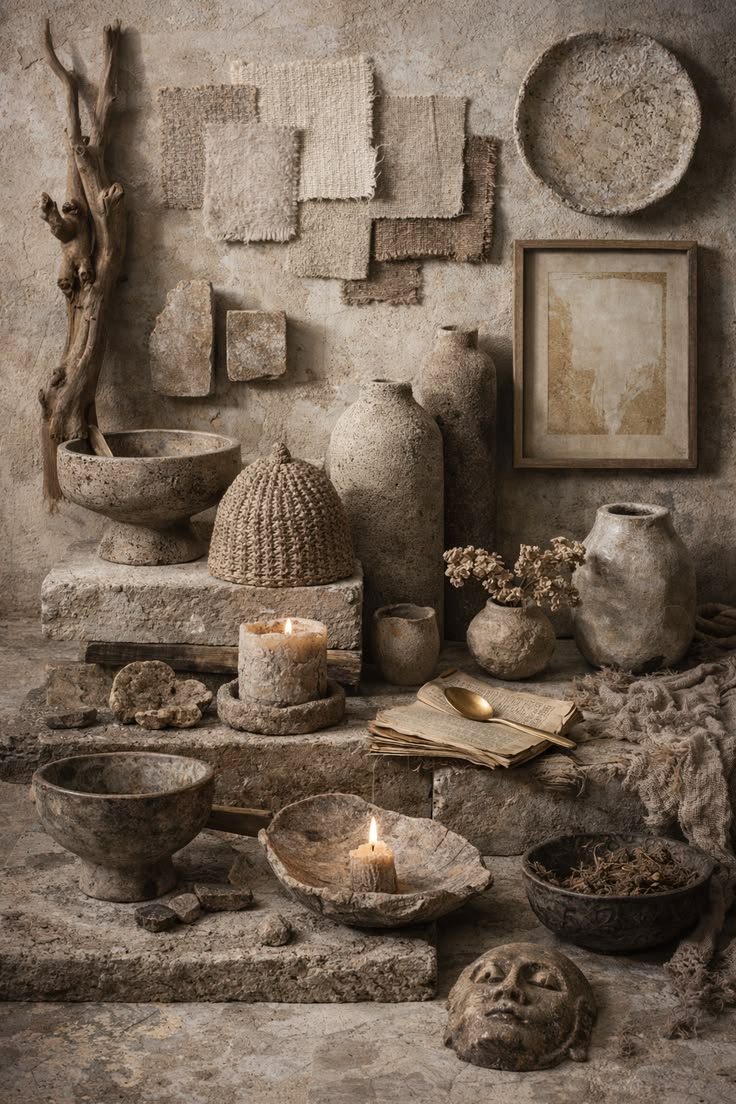
Perhaps one of the most interesting ideas within wabi-sabi is the acceptance of time.
Contemporary culture often treats aging as something to resist.
Objects are replaced.
Surfaces are restored.
Images are retouched.
Garments are photographed without wrinkles.
Buildings are designed to appear new for as long as possible.
Wabi-sabi offers another possibility.
What if age adds information?
A worn surface tells us that something has been touched.
A faded textile tells us that it has been used.
A repaired object carries evidence of care.
A garment that changes through wear can develop a relationship with its wearer that a completely untouched object cannot.
In this sense, time does not necessarily reduce beauty.
It can create it.
Wabi-Sabi in a Digital World
There is an interesting tension between wabi-sabi and digital fashion.
Digital environments are often associated with precision.
Patterns can be mathematically controlled. Surfaces can be perfectly smooth. Garments can be rendered without physical limitations. Images can be endlessly edited.
Yet this precision does not mean that digital fashion must feel sterile.
Designers can intentionally introduce irregularity through texture, silhouette, material simulation, asymmetry, lighting, and visual composition.
A digital garment can simulate the softness of worn linen.
A virtual textile can contain subtle irregularities.
A silhouette can avoid perfect symmetry.
A digital environment can include natural materials and imperfect architectural surfaces.
The goal is not to digitally reproduce every imperfection of the physical world.
It is to understand why imperfection communicates something—and then translate that quality into a digital language.
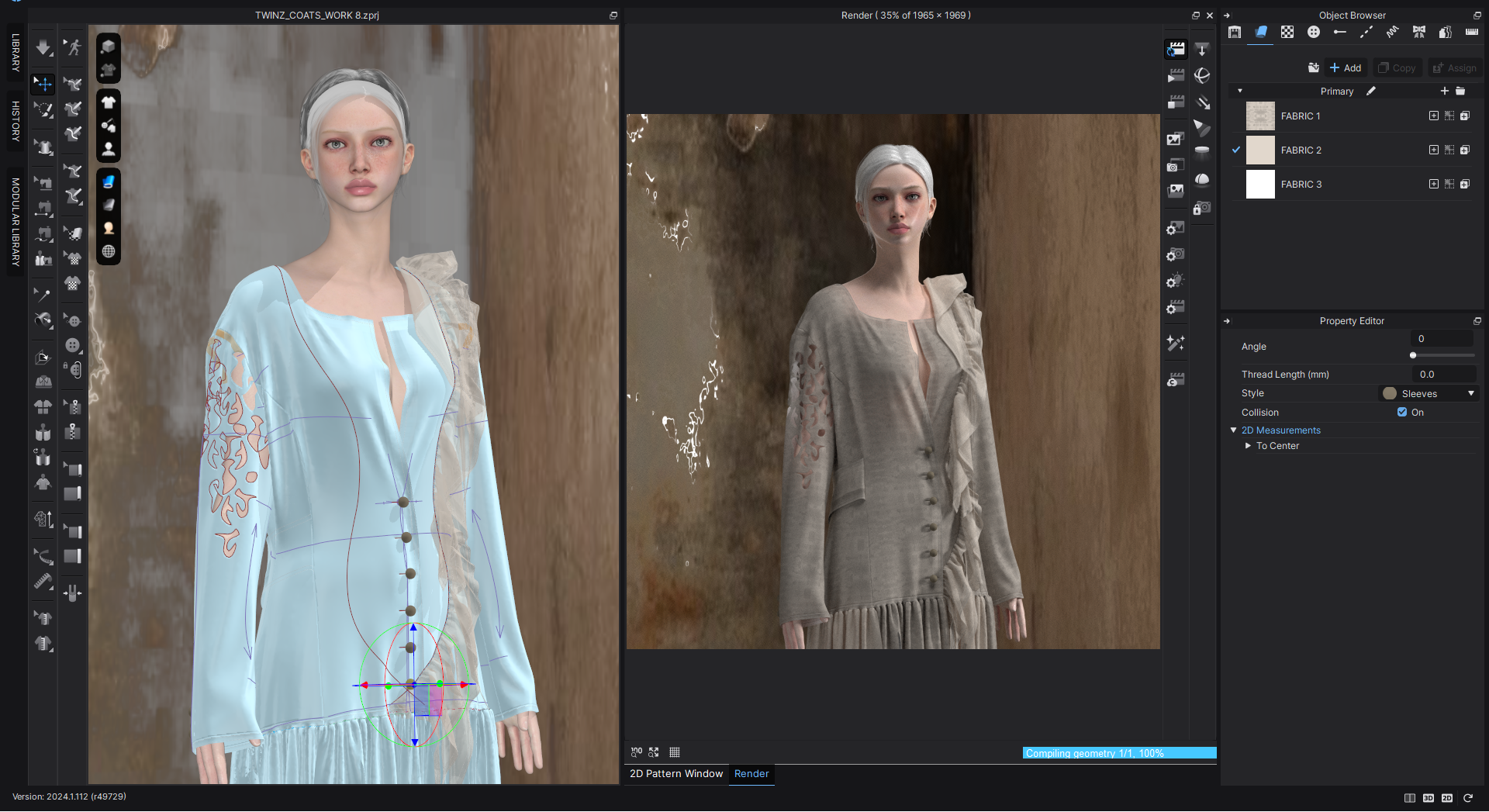
Wabi-Sabi as a Design Process
Wabi-sabi can also influence how designers work.
Instead of searching immediately for a perfect final answer, the process can remain open to discovery.
Materials can influence the form.
The form can suggest a new construction.
A mistake can reveal an unexpected possibility.
A change in texture can redirect the concept.
This approach encourages designers to observe rather than control every detail.
In architecture, this may mean allowing natural light and material aging to participate in the experience of a space.
In fashion, it may mean allowing fabric behavior to influence silhouette or allowing construction details to remain visible.
In digital design, it may mean using technology not to eliminate every irregularity, but to explore how controlled and uncontrolled elements can coexist.
The result is a process that feels less like imposing an idea onto a material and more like developing a relationship with it.
Beyond a Trend
Wabi-sabi has become increasingly visible in contemporary interiors, fashion imagery, product design, and visual culture.
But reducing it to a trend would miss the deeper idea.
Trends change quickly.
Wabi-sabi is concerned with change itself.
Its relevance comes from a willingness to accept impermanence rather than escape it.
This makes the philosophy particularly interesting at a time when design is increasingly shaped by digital perfection, fast production cycles, algorithmic imagery, and constant visual consumption.
Wabi-sabi offers a slower question:
What happens when we stop asking an object to look new, flawless, and complete?
And what happens when the marks of making, using, changing, and aging become part of its identity?
The TWINZ Perspective
At TWINZ STUDIO, we are interested in design that exists between precision and expression.
Our digital practice is rooted in fashion design and garment development, but digital tools also give us the opportunity to explore atmosphere, material, form, and visual storytelling in new ways.
Wabi-sabi offers an interesting perspective within this process.
It reminds us that sophistication does not always require excess.
That material can speak without decoration.
That asymmetry can create balance.
That texture can communicate emotion.
And that a design does not need to appear perfect to feel intentional.
For a digital fashion studio, this becomes an especially relevant question:
How can technology create space for qualities that feel human?
The answer may lie not in reproducing imperfection literally, but in designing with greater awareness of material, atmosphere, restraint, and the traces of the hand behind the work.
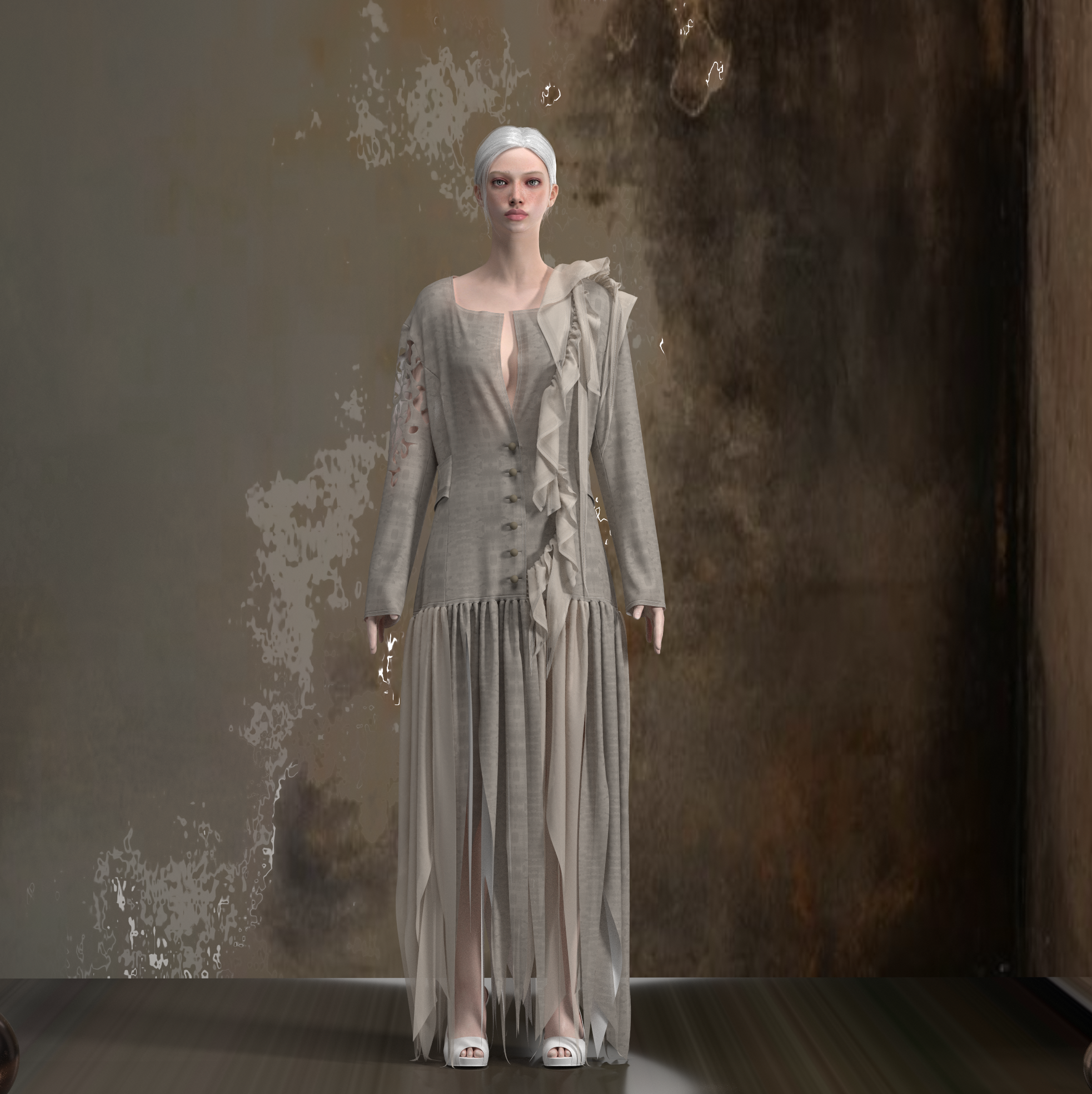
Finding Beauty in What Changes
Wabi-sabi does not provide a formula for making beautiful objects.
It provides a way of looking.
It asks us to notice the texture of materials, the passage of time, the value of simplicity, the character of irregularity, and the quiet evidence of human making.
In architecture, this can become a language of space, light, material, and aging.
In fashion, it can become a language of fabric, silhouette, construction, asymmetry, and movement.
In digital design, it can become an invitation to look beyond perfect surfaces and explore what makes an image, a garment, or an environment feel human.
Perhaps that is why wabi-sabi remains relevant.
Because in a world increasingly capable of producing perfection on demand, the qualities that cannot be perfectly controlled may become more meaningful.
The irregular.
The tactile.
The temporary.
The unfinished.
The changing.
Not because they are imperfect,
but because they are alive.